
Ableton Hotkeys Mac
- Ableton Shortcuts Mac
- Ableton Hotkeys Mac Update
- Ableton Shortcut Mac
- Ableton Hotkeys Mac Torrent
- Ableton Hotkeys Mac 10
- Ableton Key Commands Mac
- Ableton Mac Torrent
- Mar 12, 2018 Mastering the keyboard shortcuts for Ableton Live is an essential skill to make your writing and production sessions more fluid, maintaining creative flow and more effortlessly executing your ideas as they come to mind (and to hand). For beginners, this list and PDF is also a great resource to learn key features of Ableton Live.
- Search and visualize default keyboard shortcuts for Ableton Live 8 and 9. For Mac keyboards with or without a numeric keypad, and for generic PC keyboards. How to use: Click on a category on the left, then hover over a function on the right. Alternatively, enter a keyword into the search input field, and hover over the results. The appropriate keyboard shortcut will light up. Commit to memory!
To use a keyboard shortcut, press and hold one or more modifier keys and then press the last key of the shortcut. For example, to use Command-C (copy), press and hold the Command key, then the C key, then release both keys. Mac menus and keyboards often use symbols for certain keys, including modifier keys:
On keyboards made for Windows PCs, use the Alt key instead of Option, and the Windows logo key instead of Command.
The best Ableton Live Keyboard for Apple Mac and Mac OS. If you make music, you need this keyboard. Works perfectly with all versions of MacOS and Mac OSX. The keyboard contains over 200 shortcuts for Ableton Live and works with all Macs. Ableton makes Push and Live, hardware and software for music production, creation and performance. Ableton´s products are made to inspire creative music-making.
Some keys on some Apple keyboards have special symbols and functions, such as for display brightness , keyboard brightness , Mission Control, and more. If these functions aren't available on your keyboard, you might be able to reproduce some of them by creating your own keyboard shortcuts. To use these keys as F1, F2, F3, or other standard function keys, combine them with the Fn key.
Cut, copy, paste, and other common shortcuts
- Command-X: Cut the selected item and copy it to the Clipboard.
- Command-C: Copy the selected item to the Clipboard. This also works for files in the Finder.
- Command-V: Paste the contents of the Clipboard into the current document or app. This also works for files in the Finder.
- Command-Z: Undo the previous command. You can then press Shift-Command-Z to Redo, reversing the undo command. In some apps, you can undo and redo multiple commands.
- Command-A: Select All items.
- Command-F: Find items in a document or open a Find window.
- Command-G: Find Again: Find the next occurrence of the item previously found. To find the previous occurrence, press Shift-Command-G.
- Command-H: Hide the windows of the front app. To view the front app but hide all other apps, press Option-Command-H.
- Command-M: Minimize the front window to the Dock. To minimize all windows of the front app, press Option-Command-M.
- Command-O: Open the selected item, or open a dialog to select a file to open.
- Command-P: Print the current document.
- Command-S: Save the current document.
- Command-T: Open a new tab.
- Command-W: Close the front window. To close all windows of the app, press Option-Command-W.
- Option-Command-Esc: Force quit an app.
- Command–Space bar: Show or hide the Spotlight search field. To perform a Spotlight search from a Finder window, press Command–Option–Space bar. (If you use multiple input sources to type in different languages, these shortcuts change input sources instead of showing Spotlight. Learn how to change a conflicting keyboard shortcut.)
- Control–Command–Space bar: Show the Character Viewer, from which you can choose emoji and other symbols.
- Control-Command-F: Use the app in full screen, if supported by the app.
- Space bar: Use Quick Look to preview the selected item.
- Command-Tab: Switch to the next most recently used app among your open apps.
- Shift-Command-5: In macOS Mojave or later, take a screenshot or make a screen recording. Or use Shift-Command-3 or Shift-Command-4 for screenshots. Learn more about screenshots.
- Shift-Command-N: Create a new folder in the Finder.
- Command-Comma (,): Open preferences for the front app.
Ableton Shortcuts Mac
Sleep, log out, and shut down shortcuts
You might need to press and hold some of these shortcuts for slightly longer than other shortcuts. This helps you to avoid using them unintentionally.
- Power button: Press to turn on your Mac or wake it from sleep. Press and hold for 1.5 seconds to put your Mac to sleep.* Continue holding to force your Mac to turn off.
- Option–Command–Power button* or Option–Command–Media Eject : Put your Mac to sleep.
- Control–Shift–Power button* or Control–Shift–Media Eject : Put your displays to sleep.
- Control–Power button* or Control–Media Eject : Display a dialog asking whether you want to restart, sleep, or shut down.
- Control–Command–Power button:* Force your Mac to restart, without prompting to save any open and unsaved documents.
- Control–Command–Media Eject : Quit all apps, then restart your Mac. If any open documents have unsaved changes, you will be asked whether you want to save them.
- Control–Option–Command–Power button* or Control–Option–Command–Media Eject : Quit all apps, then shut down your Mac. If any open documents have unsaved changes, you will be asked whether you want to save them.
- Control-Command-Q: Immediately lock your screen.
- Shift-Command-Q: Log out of your macOS user account. You will be asked to confirm. To log out immediately without confirming, press Option-Shift-Command-Q.
* Does not apply to the Touch ID sensor.
Finder and system shortcuts
- Command-D: Duplicate the selected files.
- Command-E: Eject the selected disk or volume.
- Command-F: Start a Spotlight search in the Finder window.
- Command-I: Show the Get Info window for a selected file.
- Command-R: (1) When an alias is selected the Finder: show the original file for the selected alias. (2) In some apps, such as Calendar or Safari, refresh or reload the page. (3) In Software Update preferences, check for software updates again.
- Shift-Command-C: Open the Computer window.
- Shift-Command-D: Open the desktop folder.
- Shift-Command-F: Open the Recents window, showing all of the files you viewed or changed recently.
- Shift-Command-G: Open a Go to Folder window.
- Shift-Command-H: Open the Home folder of the current macOS user account.
- Shift-Command-I: Open iCloud Drive.
- Shift-Command-K: Open the Network window.
- Option-Command-L: Open the Downloads folder.
- Shift-Command-N: Create a new folder.
- Shift-Command-O: Open the Documents folder.
- Shift-Command-P: Show or hide the Preview pane in Finder windows.
- Shift-Command-R: Open the AirDrop window.
- Shift-Command-T: Show or hide the tab bar in Finder windows.
- Control-Shift-Command-T: Add selected Finder item to the Dock (OS X Mavericks or later)
- Shift-Command-U: Open the Utilities folder.
- Option-Command-D: Show or hide the Dock.
- Control-Command-T: Add the selected item to the sidebar (OS X Mavericks or later).
- Option-Command-P: Hide or show the path bar in Finder windows.
- Option-Command-S: Hide or show the Sidebar in Finder windows.
- Command–Slash (/): Hide or show the status bar in Finder windows.
- Command-J: Show View Options.
- Command-K: Open the Connect to Server window.
- Command-L: Make an alias of the selected item.
- Command-N: Open a new Finder window.
- Option-Command-N: Create a new Smart Folder.
- Command-T: Show or hide the tab bar when a single tab is open in the current Finder window.
- Option-Command-T: Show or hide the toolbar when a single tab is open in the current Finder window.
- Option-Command-V: Move: Move the files in the Clipboard from their original location to the current location.
- Command-Y: Use Quick Look to preview the selected files.
- Option-Command-Y: View a Quick Look slideshow of the selected files.
- Command-1: View the items in the Finder window as icons.
- Command-2: View the items in a Finder window as a list.
- Command-3: View the items in a Finder window in columns.
- Command-4: View the items in a Finder window in a gallery.
- Command–Left Bracket ([): Go to the previous folder.
- Command–Right Bracket (]): Go to the next folder.
- Command–Up Arrow: Open the folder that contains the current folder.
- Command–Control–Up Arrow: Open the folder that contains the current folder in a new window.
- Command–Down Arrow: Open the selected item.
- Right Arrow: Open the selected folder. This works only when in list view.
- Left Arrow: Close the selected folder. This works only when in list view.
- Command-Delete: Move the selected item to the Trash.
- Shift-Command-Delete: Empty the Trash.
- Option-Shift-Command-Delete: Empty the Trash without confirmation dialog.
- Command–Brightness Up: Turn target display mode on or off.
- Command–Brightness Down: Turn video mirroring on or off when your Mac is connected to more than one display.
- Option–Brightness Up: Open Displays preferences. This works with either Brightness key.
- Control–Brightness Up or Control–Brightness Down: Change the brightness of your external display, if supported by your display.
- Option–Shift–Brightness Up or Option–Shift–Brightness Down: Adjust the display brightness in smaller steps. Add the Control key to this shortcut to make the adjustment on your external display, if supported by your display.
- Option–Mission Control: Open Mission Control preferences.
- Command–Mission Control: Show the desktop.
- Control–Down Arrow: Show all windows of the front app.
- Option–Volume Up: Open Sound preferences. This works with any of the volume keys.
- Option–Shift–Volume Up or Option–Shift–Volume Down: Adjust the sound volume in smaller steps.
- Option–Keyboard Brightness Up: Open Keyboard preferences. This works with either Keyboard Brightness key.
- Option–Shift–Keyboard Brightness Up or Option–Shift–Keyboard Brightness Down: Adjust the keyboard brightness in smaller steps.
- Option key while double-clicking: Open the item in a separate window, then close the original window.
- Command key while double-clicking: Open a folder in a separate tab or window.
- Command key while dragging to another volume: Move the dragged item to the other volume, instead of copying it.
- Option key while dragging: Copy the dragged item. The pointer changes while you drag the item.
- Option-Command while dragging: Make an alias of the dragged item. The pointer changes while you drag the item.
- Option-click a disclosure triangle: Open all folders within the selected folder. This works only when in list view.
- Command-click a window title: See the folders that contain the current folder.
- Learn how to use Command or Shift to select multiple items in the Finder.
- Click the Go menu in the Finder menu bar to see shortcuts for opening many commonly used folders, such as Applications, Documents, Downloads, Utilities, and iCloud Drive.
Ableton Hotkeys Mac Update
Document shortcuts
The behavior of these shortcuts may vary with the app you're using.
- Command-B: Boldface the selected text, or turn boldfacing on or off.
- Command-I: Italicize the selected text, or turn italics on or off.
- Command-K: Add a web link.
- Command-U: Underline the selected text, or turn underlining on or off.
- Command-T: Show or hide the Fonts window.
- Command-D: Select the Desktop folder from within an Open dialog or Save dialog.
- Control-Command-D: Show or hide the definition of the selected word.
- Shift-Command-Colon (:): Display the Spelling and Grammar window.
- Command-Semicolon (;): Find misspelled words in the document.
- Option-Delete: Delete the word to the left of the insertion point.
- Control-H: Delete the character to the left of the insertion point. Or use Delete.
- Control-D: Delete the character to the right of the insertion point. Or use Fn-Delete.
- Fn-Delete: Forward delete on keyboards that don't have a Forward Delete key. Or use Control-D.
- Control-K: Delete the text between the insertion point and the end of the line or paragraph.
- Fn–Up Arrow: Page Up: Scroll up one page.
- Fn–Down Arrow: Page Down: Scroll down one page.
- Fn–Left Arrow: Home: Scroll to the beginning of a document.
- Fn–Right Arrow: End: Scroll to the end of a document.
- Command–Up Arrow: Move the insertion point to the beginning of the document.
- Command–Down Arrow: Move the insertion point to the end of the document.
- Command–Left Arrow: Move the insertion point to the beginning of the current line.
- Command–Right Arrow: Move the insertion point to the end of the current line.
- Option–Left Arrow: Move the insertion point to the beginning of the previous word.
- Option–Right Arrow: Move the insertion point to the end of the next word.
- Shift–Command–Up Arrow: Select the text between the insertion point and the beginning of the document.
- Shift–Command–Down Arrow: Select the text between the insertion point and the end of the document.
- Shift–Command–Left Arrow: Select the text between the insertion point and the beginning of the current line.
- Shift–Command–Right Arrow: Select the text between the insertion point and the end of the current line.
- Shift–Up Arrow: Extend text selection to the nearest character at the same horizontal location on the line above.
- Shift–Down Arrow: Extend text selection to the nearest character at the same horizontal location on the line below.
- Shift–Left Arrow: Extend text selection one character to the left.
- Shift–Right Arrow: Extend text selection one character to the right.
- Option–Shift–Up Arrow: Extend text selection to the beginning of the current paragraph, then to the beginning of the following paragraph if pressed again.
- Option–Shift–Down Arrow: Extend text selection to the end of the current paragraph, then to the end of the following paragraph if pressed again.
- Option–Shift–Left Arrow: Extend text selection to the beginning of the current word, then to the beginning of the following word if pressed again.
- Option–Shift–Right Arrow: Extend text selection to the end of the current word, then to the end of the following word if pressed again.
- Control-A: Move to the beginning of the line or paragraph.
- Control-E: Move to the end of a line or paragraph.
- Control-F: Move one character forward.
- Control-B: Move one character backward.
- Control-L: Center the cursor or selection in the visible area.
- Control-P: Move up one line.
- Control-N: Move down one line.
- Control-O: Insert a new line after the insertion point.
- Control-T: Swap the character behind the insertion point with the character in front of the insertion point.
- Command–Left Curly Bracket ({): Left align.
- Command–Right Curly Bracket (}): Right align.
- Shift–Command–Vertical bar ( ): Center align.
- Option-Command-F: Go to the search field.
- Option-Command-T: Show or hide a toolbar in the app.
- Option-Command-C: Copy Style: Copy the formatting settings of the selected item to the Clipboard.
- Option-Command-V: Paste Style: Apply the copied style to the selected item.
- Option-Shift-Command-V: Paste and Match Style: Apply the style of the surrounding content to the item pasted within that content.
- Option-Command-I: Show or hide the inspector window.
- Shift-Command-P: Page setup: Display a window for selecting document settings.
- Shift-Command-S: Display the Save As dialog, or duplicate the current document.
- Shift–Command–Minus sign (-): Decrease the size of the selected item.
- Shift–Command–Plus sign (+): Increase the size of the selected item. Command–Equal sign (=) performs the same function.
- Shift–Command–Question mark (?): Open the Help menu.
Other shortcuts
For more shortcuts, check the shortcut abbreviations shown in the menus of your apps. Every app can have its own shortcuts, and shortcuts that work in one app might not work in another.
- Apple Music shortcuts: Choose Help > Keyboard shortcuts from the menu bar in the Music app.
- Other shortcuts: Choose Apple menu > System Preferences, click Keyboard, then click Shortcuts.
Learn more
- Create your own shortcuts and resolve conflicts between shortcuts
- Change the behavior of the function keys or modifier keys
Ableton Live 10 has been out for a couple of months now. Beyond the incredible new Wavetable synth, Multi MIDI Clip editing, the Capture feature, awesome effects and everything else there were a ton of workflow improvements too. While some of them felt a bit awkward to get the hang of after spending so much time in the early versions of Live, within a month or so I've found the changes to be genuinely useful and very welcome!
I figured I would share my top 10 shortcuts in Ableton Live 10 to help you speed up your workflow and get you more time for the fun part… producing good music!
This set of shortcuts focuses on the Arrangement View in Live. Though some of them are applicable to Session View, not all of them are.
1 - Toggle Automation Mode – A (Windows / Max)
This is by far my most used keyboard shortcut in Live 10. I love it. Pressing A on the keyboard hides and/or reveals automation lines for you tracks.
Ableton Shortcut Mac
It also does the same for the clip fade handles too. Hiding one will reveal the other which is one reason this shortcut had to be added. Having those fades right on the edge of the clip at the click of one key is awesome too!
2 - Split Clip at Selection – CTRL + E (Windows) CMD + E (Mac)
This little shortcut blows my mind. I used to have to highlight a section of audio, then click it and drag it a little to the left or right, and then drop it back down in its original place to make a section. This process would have to be done over and over again. But now, just select then CTRL + E and boom goes the dynamite.
3 - Zoom to Arrangement Time Selection – Z (Windows / Mac)
Highlight a section of your tune and press Z. Live will zoom in and focus on that part for you instantly. No more clicking and dragging up and down on the top of the timeline. Another huge time saver that I find myself using all the time.
4 - Full Zoom Out – Shift + Z (Windows / Mac)
This shortcut goes hand-in-hand with the last one. This will zoom you all the way out. It will also fold (collapse) any channels you have unfolded giving you the biggest picture you can get.
https://potentwo580.weebly.com/blog/mac-os-x-hard-drive-repair-software. Also, a bonus shortcut while we are on the subject, the S key (Windows / Mac) will fold all your channels without zooming out letting you see more of the channels of larger projects.
5 - Reverse Audio Clip Selection – R (Windows / Mac)
Reversing audio files is something that I personally do a lot in my projects. I used to have to highlight the audio clip and move the cursor all the way down to the sample panel and hit the Rev button. Now, simply press R and move forward. Brilliant!
6 - Activate / Deactivate Computer MIDI Keyboard – M (Windows / Mac)
Because of all these glorious new shortcuts the Computer MIDI Keyboard isn’t activated by default anymore. But it does have its own shortcut. Simply hit M and you’ll activate it, then M again to turn it off.
7 - Arrow Keys to Nudge / Move Clips – Left / Right (Windows / Mac)
If you have a clip, or multiple clips or your whole project selected you can now hit the left or right arrow keys to shift those clips in the timeline. The jumps will happen by the current grid size. Below are a couple of bonus shortcuts for you that will help you utilize this one above better.
- Command / Control + 1 to Narrow the Grid
- Command / Control + 2 to Widen the Grid
- Command / Control + 3 for the Triplet Grid
Ableton Hotkeys Mac Torrent

8 - Temporarily Bypass Snapping While Dragging – Alt (Windows) CMD (Mac)
Another great feature new in Live 10 is when moving automation points they snap to the grid. However, you might not always want that. Simply press and hold Alt (Windows) / CMD (Mac) to temporarily bypass the snapping feature for the duration the key is pressed. This also works for moving audio and MIDI clips in the timeline as well.
9 - 2 New Ways for Working with Clips in the Arrangement
First, you to change the segment BPM of the clip. With automation lines hidden, hold shift and click the upper part of the clip’s waveform at either end of the clip. Before clicking you should see a bracket when you are near the edge, then when you press shift the bracket should get an arrow next to it. This allows you to adjust the segment BPM for that clip. This is helpful for double or half time changes or getting creative and unexpected results.
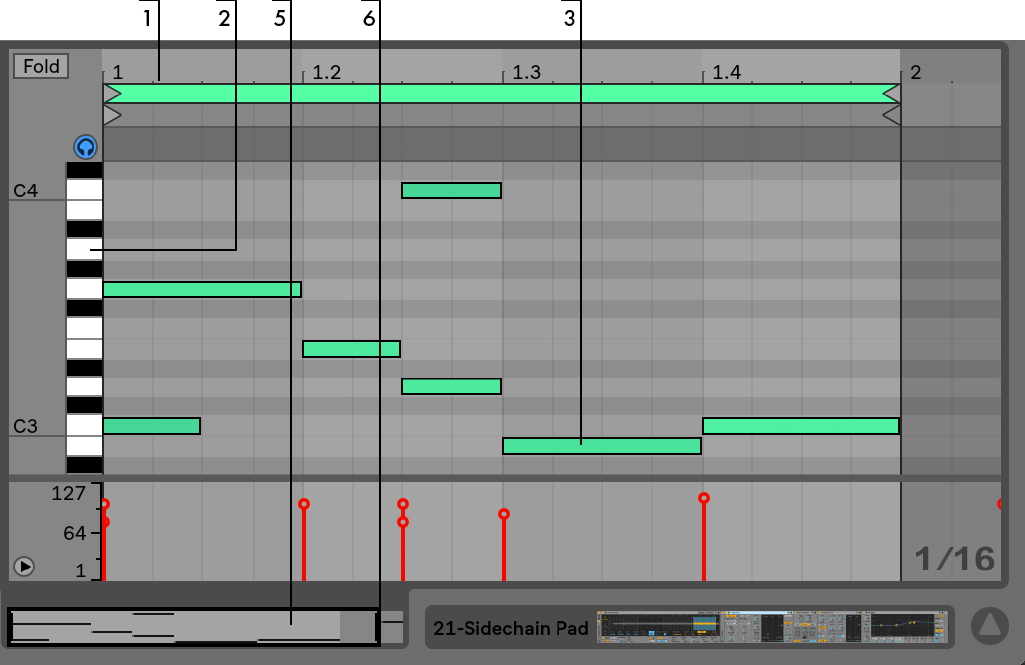
Second, you to change the clip’s Loop bar. With automation lanes hidden, hold Ctrl/CMD + Shift + click on the waveform in the clip and drag left or right. This will adjust the loop length and position for that clip.
10 - While Renaming, Go to next Track – Tab (Windows / Mac)
This is absolutely brilliant. Have you ever just gone down the rabbit hole and made a project with 30+ channels and didn’t have the time to name a single one? Then, stepping back for a moment you remember how important naming channels can be. Well now you can rename them all in a breeze.
Ableton Hotkeys Mac 10
First, you should know the shortcut for renaming anything in Live. That’s Ctrl/CMD + R
If you rename channel one for example, instead of hitting enter to cement the change and exit renaming mode, you can now hit Tab and jump to the next channel and rename it too. You can do that all the way down your project. This has already saved me a ton of time!
Ableton Key Commands Mac
These are just a few of my favorites. There were a lot more added to the update. I can’t recommend enough that you go and read Ableton’s shortcut help document and see what else there is to be discovered. Perhaps there is something not listed here that is perfect for your workflow!!